Why Magnesium Chloride and Potassium Chloride May Offer Broader Benefits Than Magnesium Sulfate (Epsom Salt)
For generations, Epsom Salt has been a popular choice for warm baths and muscle relaxation. Its active ingredient, magnesium sulfate, has earned a well-deserved reputation as a simple addition to self-care routines.
But Epsom Salt is not the only mineral-rich bathing option.
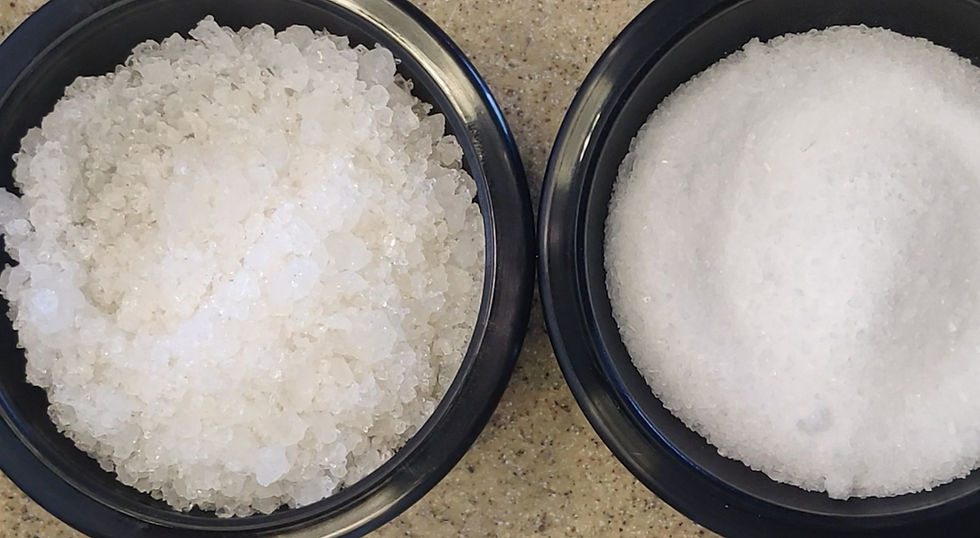
A naturally occurring mineral from the Jordanian Dead Sea, Jordanian Carnallite Mineral, contains a completely different mineral profile. Instead of magnesium sulfate, Carnallite Mineral is naturally rich in magnesium chlorideand potassium chloride, while remaining naturally low in sodium chloride.
Understanding these differences helps explain why many people are becoming interested in Carnallite Mineral as an alternative for mineral bathing.
Two Different Magnesium Salts
Although both products contain magnesium, they are chemically different.
Epsom Salt
Magnesium sulfate (MgSO₄)
Contains magnesium and sulfate
Widely used in bath soaks and gardening
Carnallite Mineral
Naturally contains magnesium chloride (MgCl₂)
Naturally contains potassium chloride (KCl)
Naturally low in sodium chloride
Formed naturally in the Jordanian Dead Sea
This difference is important because the accompanying mineral - not just the magnesium itself - changes the overall composition of the bath.
Why Magnesium Chloride Receives So Much Attention
Magnesium chloride has become increasingly popular in topical wellness products such as mineral oils, bath flakes, and spa treatments.
Researchers have investigated magnesium because it is involved in more than 300 enzymatic processes in the human body, including:
Normal muscle function
Healthy nerve signaling
Energy production
Protein synthesis
Electrolyte balance
While scientists continue to study how much magnesium can be absorbed through the skin, many people report enjoying magnesium chloride baths as part of their relaxation routine.
The Often-Overlooked Role of Potassium Chloride
One of the biggest differences between Carnallite Mineral and Epsom Salt is that Carnallite Mineral naturally contains potassium chloride.
Potassium is one of the body's major electrolytes and works alongside magnesium in many biological processes.
Together, magnesium and potassium help support:
Normal muscle function
Healthy nerve communication
Proper fluid balance
Electrolyte regulation
Normal cellular function
Rather than relying on a single mineral, Carnallite Mineral provides a naturally occurring combination of magnesium and potassium - two minerals that naturally work together throughout the body.
Why This Combination Matters
Think of magnesium and potassium as teammates.
Magnesium plays an important role in hundreds of biochemical reactions, while potassium is essential for maintaining normal muscle contractions, nerve impulses, and fluid balance.
When these minerals naturally occur together, they create a broader mineral profile than magnesium sulfate alone.
Unlike Epsom Salt, which provides only magnesium sulfate, Carnallite Mineral delivers two of the body's major electrolytes in their naturally occurring chloride forms.
Although additional clinical research is needed to determine whether topical mineral combinations provide greater benefits than single-mineral products, many wellness professionals appreciate the naturally balanced mineral composition found in Jordanian Carnallite Mineral.
Naturally Low in Sodium Chloride
One of the most unique characteristics of Jordanian Carnallite Mineral is its naturally low sodium chloride content.
Traditional Dead Sea salt products often contain significantly higher levels of sodium chloride because they are harvested as mixed evaporated salts.
Carnallite Mineral is different.
Its naturally low sodium chloride level, combined with high concentrations of magnesium chloride and potassium chloride, creates a mineral composition unlike most bath salts available today.
Many users also report that mineral baths made with Carnallite Mineral feel gentler on the skin than traditional high-sodium bath salts.
Carnallite Mineral Is More Than "Dead Sea Salt"
Many products are marketed simply as "Dead Sea Salt."
However, Carnallite Mineral is a specific naturally occurring mineral that forms within the Jordanian Dead Sea evaporation basin.
It is not simply another name for Dead Sea salt.
Its naturally occurring mineral composition distinguishes it from both:
Traditional Dead Sea salt mixtures
Epsom Salt (magnesium sulfate)
This unique composition is one of the reasons Carnallite Mineral is gaining attention among people looking for mineral-rich alternatives for bathing and self-care.
Choosing the Right Mineral Bath
Neither Epsom Salt nor Carnallite Mineral should be considered a medical treatment.
Instead, each offers a different mineral bathing experience.
Choose Epsom Salt if you are specifically looking for magnesium sulfate.
Choose Carnallite Mineral if you prefer a naturally occurring mineral that is rich in magnesium chloride and potassium chloride while naturally low in sodium chloride.
Understanding the mineral composition allows you to make a more informed choice based on your personal preferences and wellness goals.
Final Thoughts
Nature rarely relies on a single mineral.
The human body depends on multiple electrolytes working together, and Carnallite Mineral naturally reflects that balance.
Its unique combination of magnesium chloride, potassium chloride, and naturally low sodium chloride makes it different from both Epsom Salt and traditional Dead Sea salt products.
If you are looking to experience a naturally different mineral bath, Jordanian Carnallite Mineral offers a unique mineral composition that has been formed by nature over thousands of years in one of the world's most remarkable mineral environments.
Scientific References
Gröber U., Werner T., Vormann J. Myth or Reality - Transdermal Magnesium? Nutrients. 2017.
National Institutes of Health - Office of Dietary Supplements. Magnesium Fact Sheet for Health Professionals.
Jahnen-Dechent W., Ketteler M. Magnesium Basics. Clinical Kidney Journal.
de Baaij J.H.F., Hoenderop J.G.J., Bindels R.J.M. Magnesium in Man: Implications for Health and Disease.Physiological Reviews.
Volpe S.L. Magnesium in Disease Prevention and Overall Health. Advances in Nutrition.


Comments