Carnallite Salt vs Epsom Salt and What Makes Them Different
Updated: Aug 3
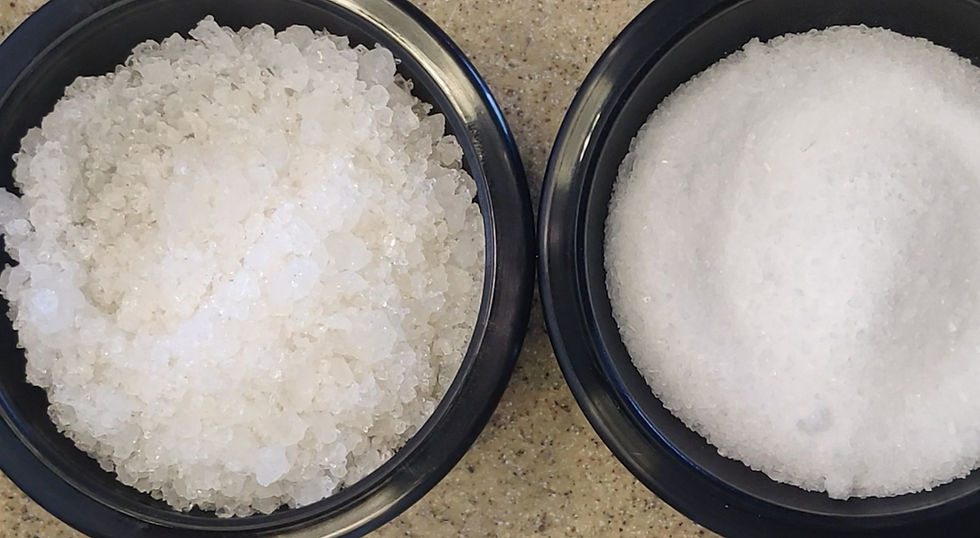
Epsom salt has been the default bath salt in American homes for generations. It is inexpensive, easy to find, and familiar. So when people first hear about carnallite salt from the Dead Sea, the natural question is whether it is really any different from the Epsom salt already sitting in their bathroom cabinet.

The short answer is yes, and the difference is bigger than most people expect. The two salts come from entirely different sources, deliver magnesium in different forms, and produce noticeably different results in the bath. Here is a clear, honest comparison to help you choose the right one for your ritual.
What Is Epsom Salt?
Despite the name, Epsom salt is not actually a sea salt. It is magnesium sulfate, a single chemical compound originally discovered in the mineral springs of Epsom, England. Today, nearly all Epsom salt is produced industrially rather than harvested from a natural source.
Its appeal is simple. It delivers magnesium in a soluble form, and it is affordable. For a quick soak after a workout, it does a serviceable job. But because it is one compound and nothing more, an Epsom bath offers magnesium alone, without the supporting minerals that natural sea brines contain.
What Is Carnallite Salt?
Carnallite is a naturally occurring mineral that crystallizes in the deepest, most concentrated layers of the Dead Sea. Harvested from the Jordanian side of the sea, it is a hydrated compound of magnesium and potassium chloride, accompanied by natural trace elements such as calcium and bromide salts.
Unlike ordinary sea salt, carnallite is naturally low in sodium chloride, the ingredient responsible for the tight, dry feeling many people get after regular salt baths. If you are new to this mineral, our full explainer on what carnallite salt is covers its origin and composition in detail.
Carnallite vs Epsom at a Glance
Carnallite Salt | Epsom Salt | |
Origin | Natural mineral from the Jordanian Dead Sea brine | Mined or industrially produced magnesium sulfate |
Key minerals | Magnesium and potassium chloride, trace bromides | Magnesium sulfate only |
Mineral variety | Multi-mineral, full Dead Sea profile | Single compound |
Sodium chloride | Naturally low | None, but no other minerals either |
Skin feel after bath | Soft, supple, moisturized | Can feel drying with frequent use |
Best for | Skin comfort and complete mineral bathing rituals | Occasional muscle soaks |
The Magnesium Difference That Matters
Both salts are valued for magnesium, but the form is not the same. Epsom salt provides magnesium sulfate. Carnallite provides magnesium chloride, the same form found naturally in Dead Sea water. Magnesium chloride is highly soluble and stays stable in warm bath water, which is one reason Dead Sea bathing has held its reputation for centuries while sulfate-based soaks remain a more modern shortcut.
Carnallite also pairs its magnesium with potassium, a mineral Epsom salt does not contain at all. Potassium supports skin hydration and works together with magnesium to create the soft, cushioned water feel that makes an authentic Dead Sea bath instantly recognizable. This multi-mineral profile is something a single-compound salt simply cannot offer.
How Each Salt Feels on the Skin
This is where most people notice the difference first. Epsom soaks can leave skin feeling slightly dry or squeaky, especially with frequent use, because magnesium sulfate does little to support the skin barrier on its own.
A carnallite bath tends to feel silkier in the water and calmer afterward. The chloride-based mineral blend helps skin hold on to moisture, so the after-bath sensation is comfort rather than tightness. For people with dry, sensitive, or easily irritated skin, that difference is often the deciding factor.
The full picture of what regular carnallite bathing does for skin comfort and relaxation is covered on our page about the benefits of carnallite salt.
Which One Should You Choose?
If your only goal is an occasional post-exercise soak and your budget is the priority, Epsom salt remains a reasonable choice. It is functional, even if it is basic.
If you want your bath to be a genuine mineral ritual, the kind that supports skin comfort, eases the feeling of tension, and recreates the environment of a natural healing water source at home, carnallite is the clear step up. It is not a processed compound but a complete natural mineral, harvested exactly as the Dead Sea created it.
Every product in our Touch of the Sea collection is built on single-origin Jordanian carnallite, from bath salt duos to complete ritual sets. You can explore the range in the Touch of the Sea collection.
The Bottom Line
Epsom salt is a single manufactured compound. Carnallite is a whole natural mineral with magnesium, potassium, and trace elements working together, all with naturally low sodium chloride. One gives you a soak. The other gives you the Dead Sea. For anyone moving from casual bathing toward intentional, mineral-based self-care, carnallite is where the upgrade begins.
Frequently Asked Questions
Is carnallite salt better than Epsom salt?
For skin comfort and complete mineral bathing, yes. Carnallite offers magnesium chloride plus potassium and trace Dead Sea minerals, while Epsom salt contains only magnesium sulfate. Epsom remains fine for occasional muscle soaks, but carnallite delivers a fuller, gentler mineral experience.
Do carnallite and Epsom salt contain the same magnesium?
No. Epsom salt contains magnesium sulfate, a manufactured compound. Carnallite contains magnesium chloride, the natural form found in Dead Sea water, alongside potassium chloride and trace elements that Epsom salt lacks.
Is Epsom salt a real sea salt?
No. Epsom salt is not harvested from any sea. It is magnesium sulfate, named after mineral springs in Epsom, England, and today it is almost entirely produced industrially.
Can I mix carnallite salt and Epsom salt in one bath?
You can, but there is little reason to. Carnallite already provides magnesium in a natural, skin-friendly chloride form along with potassium and trace minerals, so it covers everything an Epsom soak offers and more.
Is carnallite salt drying like regular bath salts?
No. Because carnallite is naturally low in sodium chloride, it does not pull moisture from the skin the way sodium-heavy salts can. Most bathers find their skin feels softer and more hydrated after a carnallite bath.
Comments