The Lost Tradition of Mineral Baths

"Long before wellness became an industry, people traveled for weeks just to sit in mineral-rich water."
Today, wellness often comes packaged in bottles, apps, and memberships. But thousands of years ago, people sought something much simpler: water.
Not just any water.
They traveled across deserts, crossed mountains, and journeyed along ancient trade routes to reach springs, lakes, and mineral-rich waters believed to offer restoration, comfort, and renewal.
The tradition of mineral bathing is one of humanity's oldest wellness practices, stretching across civilizations from ancient Egypt to Rome and throughout the Middle East.
Ancient Egypt: Water as a Sacred Gift
The ancient Egyptians understood the importance of ritual bathing long before modern science began studying minerals.
Bathing was connected to cleanliness, spirituality, and daily life. Wealthy Egyptians used natural salts, oils, and muds as part of personal care routines. Along the shores of the Dead Sea and surrounding regions, mineral-rich muds and salts became highly valued commodities traded throughout the ancient world.
Historical records suggest that even Cleopatra was fascinated by the unique properties of the Dead Sea region. The area's mineral resources were considered so valuable that they became part of royal interests and trade networks.
For Egyptians, bathing wasn't merely about washing the body - it was about creating balance.
The Roman Empire: Building a Culture Around Water
If the Egyptians embraced bathing, the Romans elevated it into an institution.
Across the Roman Empire, elaborate bathhouses became social, cultural, and civic centers. Nearly every major city featured public baths where people gathered daily.
These weren't simple pools.
Visitors moved through a sequence of warm rooms, hot baths, cold plunges, steam chambers, and relaxation areas. Entire communities formed around the ritual.
Roman engineers carefully selected locations with natural mineral springs whenever possible. They recognized that certain waters felt different on the skin and offered a unique bathing experience.
For Romans, bathing wasn't a luxury.
It was a way of life.
The Middle East and the Dead Sea
While the Romans built bathhouses, people throughout the Middle East continued to use naturally mineralized waters that had existed for thousands of years.
The Dead Sea became one of the region's most remarkable destinations.
Unlike ordinary seawater, the Dead Sea contains an exceptionally high concentration of dissolved minerals. As the desert sun evaporates water year after year, minerals become increasingly concentrated.
Among these naturally occurring minerals is Carnallite, a unique mineral rich in magnesium and potassium and naturally low in sodium chloride.
Communities living near the Dead Sea have long recognized the area's extraordinary geological character. Travelers, merchants, and pilgrims frequently visited the region, drawn by a landscape unlike anywhere else on Earth.
The experience was never only about the water itself.
It was also about slowing down.
Stepping away from daily responsibilities.
Taking time to simply be still.
What We Lost
Over time, many traditional bathing rituals faded.
Modern life became faster.
Schedules became fuller.
The simple act of sitting quietly in warm mineral-rich water was replaced by quick showers and constant activity.
Yet something interesting is happening today.
People are beginning to rediscover ancient wellness traditions - not because they're trendy, but because they offer something many modern solutions cannot.
A pause.
A moment of calm.
A chance to reconnect with the body through simple rituals.
Bringing Ancient Rituals Into Modern Life
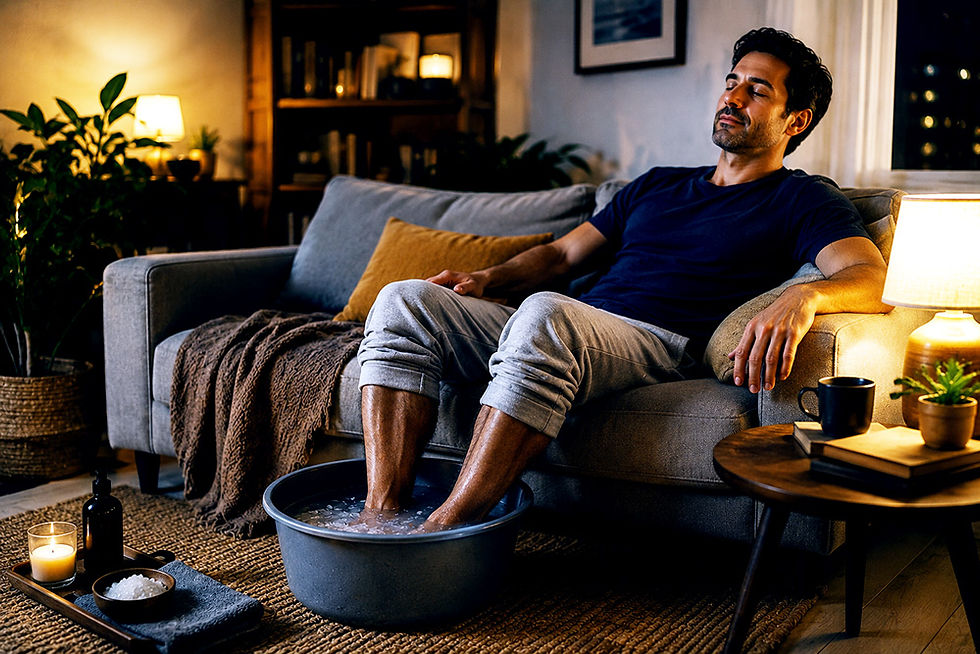
You don't need to travel across deserts or visit an ancient Roman bathhouse to experience the tradition of mineral bathing.
A bowl of warm water.
A handful of mineral-rich salt.
Ten quiet minutes.
Sometimes the oldest wellness practices remain relevant because they address a timeless human need: the need to slow down.
At Pure Sea Garden, our focus is on sharing the unique story of Carnallite from the Jordanian Dead Sea. We invite you to explore why this remarkable mineral has fascinated people for generations and discover how a simple mineral bath can become part of your own modern ritual of rest, reflection, and intentional self-care.
With passion
Anna


Comments