Is Carnallite Salt the Same as Dead Sea Salt?
At first glance, Carnallite and “Dead Sea salt” are often grouped together in wellness, skincare, and bath product categories. Both are associated with natural mineral origins and self-care rituals. However, they are not the same material - and in today’s marketplace, where naming is often inconsistent, this difference is important for both consumers and suppliers.

What “Dead Sea salt” means in the marketplace
Products sold as Dead Sea salt are typically associated with minerals from the Dead Sea region, one of the most mineral-rich environments in the world.
However, in commercial use, the term “Dead Sea salt” is not strictly standardized. It is often used as a broad marketing category, which may include:
Evaporated salts from Dead Sea brine
Cosmetic-grade mineral blends inspired by Dead Sea composition
Reprocessed or refined mineral mixtures
Formulations adjusted for skincare or bath products
Because of this, “Dead Sea salt” on the market can vary significantly in purity, mineral balance, and origin.
Common mineral components may include:
Magnesium compounds
Sodium chloride
Potassium salts
Calcium and trace minerals
This variability means that two products labeled “Dead Sea salt” can be very different in actual composition and quality.
What Carnallite is - and why it is different
Carnallite is not a category or blend. It is a specific naturally occurring mineral compound with a defined chemical structure:
Potassium magnesium chloride (KMgCl₃·6H₂O)
Formed through natural evaporation processes in mineral-rich environments
A single, identifiable crystalline mineral
Key distinction:
Carnallite is a precisely defined mineral substance, while “Dead Sea salt” is often a broad commercial label applied to various mixtures.
Carnallite is also:
Naturally rich in potassium and magnesium compounds
Lower in sodium compared to many salt-based blends
Chemically consistent and clearly defined
This makes it fundamentally different from typical cosmetic “Dead Sea salt” products.
Why consumers should be careful?

One of the biggest challenges in the mineral salt market is lack of standardization in naming. This can lead to confusion, where different products appear similar but are not.
Risks include:
Different compositions sold under the same name
Blends marketed as “natural Dead Sea salt” without full disclosure
Misidentification of specific minerals like Carnallite as general bath salt
Important note about AI and online information
Even AI systems and search engines can contribute to this confusion. They often rely on publicly available online content, which is frequently shaped by marketing descriptions rather than strict mineral classification.
As a result:
AI may group different minerals under the same category
Promotional language can be repeated as factual information
Distinctions between specific minerals and blends may become blurred
This doesn’t mean AI is trying to be wrong - it simply depends on the information it has access to. If that information is incomplete or mostly marketing-based, the answers can end up sounding oversimplified or a bit unclear, even when they’re not fully accurate.
Why unclear information is a real problem for the industry
This lack of clarity does not only affect consumers - it also negatively impacts long-term, legitimate suppliers who truly sell original or properly sourced Dead Sea minerals.
When terminology becomes too broad or misleading:
Genuine suppliers of authentic Dead Sea mineral products lose differentiation
High-quality sourcing becomes harder to recognize in the market
Price and quality expectations become distorted
Trust in the category as a whole is weakened
In other words, vague labeling and inconsistent information can damage the reputation of producers who invest in authentic sourcing and proper mineral handling - especially those who have been working with genuine Dead Sea salt for a very long time.
Why Carnallite deserves special attention
CARNALLITE is often incorrectly grouped under “Dead Sea salt” despite being a distinct mineral with its own chemical identity.
It is important to understand that:
Carnallite is a specific mineral compound, not a blended cosmetic ingredient
It has a defined and stable chemical composition
It is not interchangeable with general “Dead Sea salt” products
It represents a different mineral category altogether
Final takeaway
No - Carnallite is not the same as Dead Sea salt.
“Dead Sea salt” is a broad, often inconsistent marketplace category
CARNALLITE is a specific, chemically defined mineral compound
Because naming in the mineral salt industry is not standardized - and because even online and AI-generated summaries can reflect marketing-driven information - it is essential to look deeper than product labels.
Clear mineral composition, transparent sourcing, and accurate classification are what truly matter. This not only helps customers make informed choices, but also supports long-term integrity for suppliers who genuinely work with authentic Dead Sea Salt for a very long time.
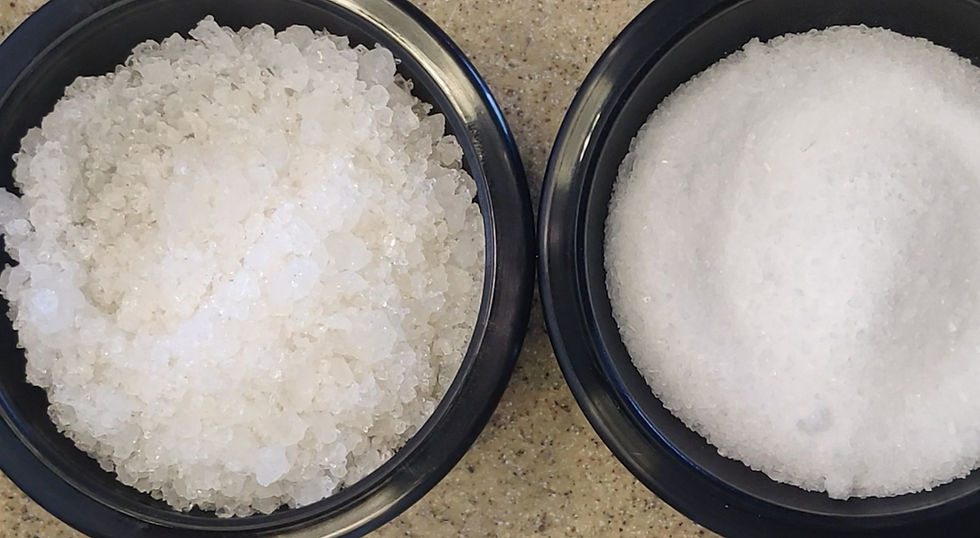
How to recognize the right salt - look at the pictures and ask questions
One of the first things you can do is carefully look at product images. Photos often reveal more than the product name alone.
Pay attention to:
Crystal appearance (natural mineral structure vs. uniform, processed-looking grains)
Color and consistency (authentic minerals often vary slightly, not perfectly identical)
Packaging clarity (does it clearly explain origin and mineral type, or just use general “spa salt” wording?)
Real photos vs. stock images (authentic brands usually show their actual product)
But visuals are only the first step.
Always ask for certification of ORIGIN
A trustworthy supplier should be able to provide clear information about where the salt comes from. This can include:
Certificate of origin
Mineral composition report
Proof of sourcing location or supplier documentation
If a company cannot clearly explain or document the origin, it’s worth being cautious.
Why this matters
Pictures can help you get a first impression, but only verified origin and clear mineral information confirm what you are actually buying. This helps you avoid confusion in a market where similar-looking products can be very different in quality and composition.
With passion
Anna


Comments