Carnallite vs. Traditional Dead Sea Salt – What's the Difference?
Compare Carnallite vs. Traditional Dead Sea Salt and discover the differences in mineral composition, benefits, and overall bathing experience.
Carnallite vs. Traditional Dead Sea Salt: Understanding the Difference
When people hear the phrase Dead Sea Salt, they often imagine one universal product. In reality, the Dead Sea contains a complex mixture of minerals, and different products can have very different compositions depending on where and how they are collected.
One of the most unique naturally occurring minerals found in the Dead Sea is Carnallite. Although it comes from the same region, Carnallite differs substantially from traditional Dead Sea salt in both composition and physical characteristics.
Not All Dead Sea Salt Is the Same
Traditional Dead Sea salt is generally produced by harvesting mixed mineral deposits from evaporation ponds. The final product usually contains varying proportions of minerals such as:
Sodium chloride
Magnesium chloride
Potassium chloride
Calcium chloride
Bromides
Other trace minerals
The exact mineral profile depends on the harvesting method, processing, and source.
Carnallite, however, is a naturally occurring mineral with its own distinct chemical structure. Rather than being simply a mixture of salts, it is recognized as a specific mineral species composed primarily of:
Magnesium chloride
Potassium chloride
Water of crystallization
This naturally occurring composition gives Carnallite characteristics that distinguish it from more common Dead Sea mineral blends.
A Lower Sodium Chloride Content
One of the most noticeable differences is the amount of sodium chloride (common table salt).
Traditional Dead Sea salt may contain considerably higher levels of sodium chloride depending on the product.
High-quality Carnallite mineral salt, such as material naturally sourced from Jordan, contains only a small percentage of sodium chloride—typically around 3%.
For individuals who prefer mineral-rich bathing products with relatively low sodium chloride content, this distinction is often one of the reasons Carnallite attracts attention.
Different Crystal Structure
Carnallite crystals also look different.
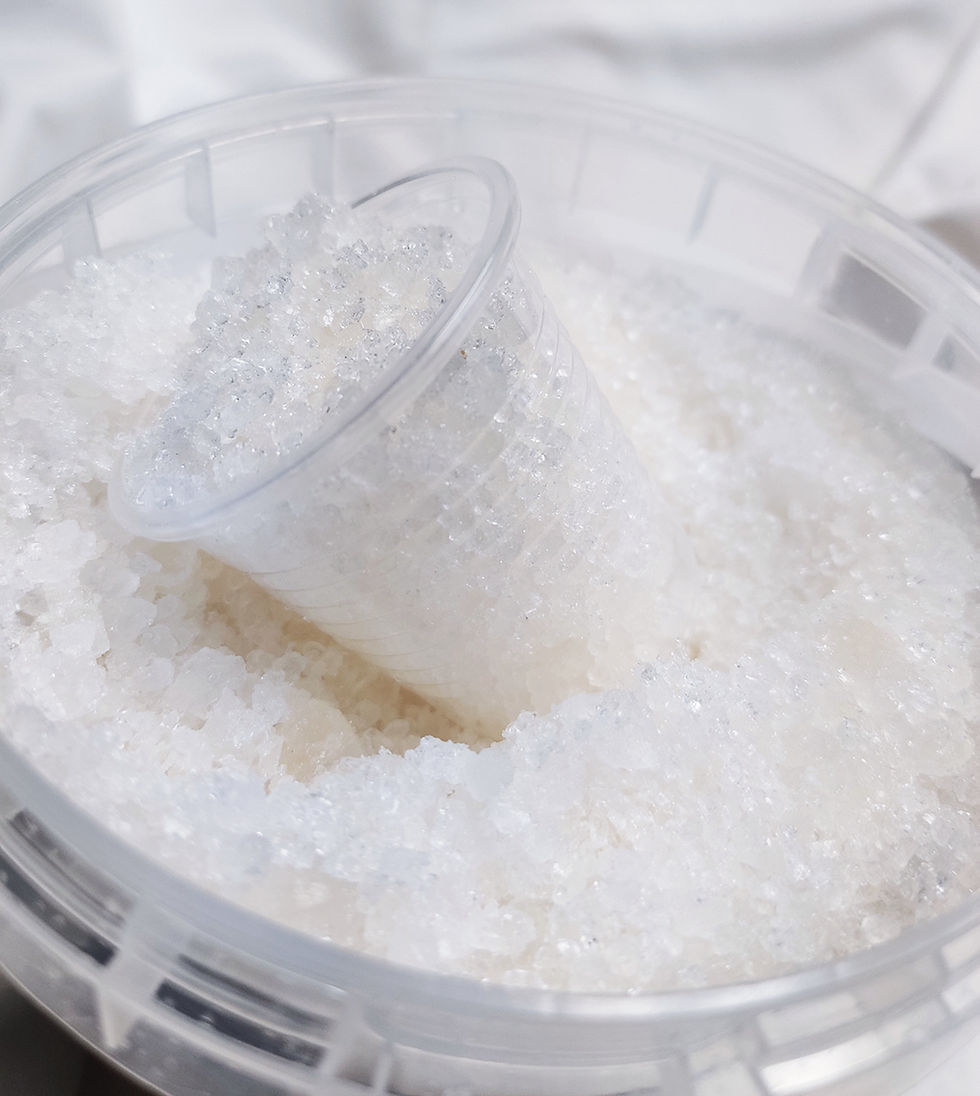
Rather than uniform white crystals commonly associated with bath salts, natural Carnallite often forms irregular, translucent crystals with shades ranging from clear to amber or light golden colors.
These irregular formations are a reminder that the mineral has undergone minimal processing and retains its natural appearance.
Rich in Magnesium and Potassium
Carnallite is naturally abundant in two minerals that have long been valued in mineral bathing traditions:
Magnesium
Potassium
These minerals contribute to the unique mineral profile that makes Carnallite different from many conventional bath salts.
While scientific research continues to investigate how topical mineral exposure interacts with the skin, magnesium-rich mineral baths have been widely appreciated for generations as part of relaxation and wellness rituals.
Why This Matters
Many people purchase products labeled simply as "Dead Sea Salt" without realizing they may be buying very different mineral compositions.
Understanding the source and mineral profile allows consumers to make more informed choices.
Rather than asking whether a product comes from the Dead Sea, a better question may be:
Which Dead Sea mineral does it actually contain?
That distinction can make a significant difference in the product's composition, appearance, and overall bathing experience.
The Bottom Line
Carnallite is not a marketing name or a premium label—it is a naturally occurring mineral found in the Dead Sea region of Jordan.
Although it originates from the same remarkable environment as traditional Dead Sea salt, its lower sodium chloride content, naturally high magnesium and potassium levels, and unique crystal structure set it apart.
Understanding these differences helps consumers appreciate that not all Dead Sea mineral products are created equal. Choosing a product based on its actual mineral composition—not just its origin—provides a clearer picture of what makes each bathing experience unique.
References / Sources
Mindat – Carnallite: https://www.mindat.org/min-923.html
Encyclopaedia Britannica – Dead Sea: https://www.britannica.com/place/Dead-Sea
NCBI – The Dead Sea: A Unique Natural Health Resource: https://pmc.ncbi.nlm.nih.gov/articles/PMC1262767/
Arab Potash Company (official): https://www.arabpotash.com